Why almond flour baked goods are too moist is one of the most common frustrations for home bakers trying to switch from traditional flour. If you’ve ever pulled a loaf, muffin, or cookie out of the oven only to find it dense, wet, or slightly underdone in the center, you’re not alone. Almond flour behaves very differently from wheat flour, and understanding those differences is the key to getting better results.
Posts may be sponsored. This post contains affiliate links, which means I will make a commission at no extra cost to you should you click through and make a purchase. As an Amazon Associate I earn from qualifying purchases.
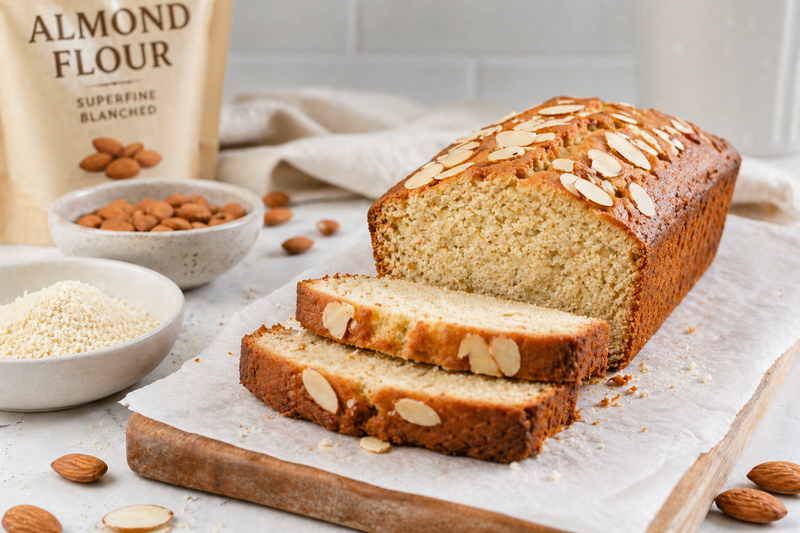
Why Almond Flour Baked Goods Are Too Moist (And How to Fix It)
Almond flour is a popular choice for gluten-free, low carb, and grain-free baking. It adds a rich flavor and soft texture, but it also contains more fat and moisture than traditional flour. That combination can easily lead to baked goods that feel too soft, overly moist, or even soggy if the recipe or technique isn’t quite right. The good news is that once you understand why this happens, it becomes much easier to fix.
Why Almond Flour Bakes Differently
Unlike all-purpose flour, almond flour is made from finely ground almonds, which naturally contain oils. These oils don’t absorb liquid the same way wheat flour does. Instead of creating a structured, airy crumb, almond flour produces a denser, more tender result.
Another key difference is the lack of gluten. Gluten helps trap air and gives baked goods structure. Without it, recipes rely on eggs or other binders for stability. This often means more moisture is added to compensate, which can tip the balance too far if not carefully measured.
Because of these factors, almond flour recipes are more sensitive to ingredient ratios, baking time, and temperature.
RELATED: Pantry Staples for Almond Flour Baking
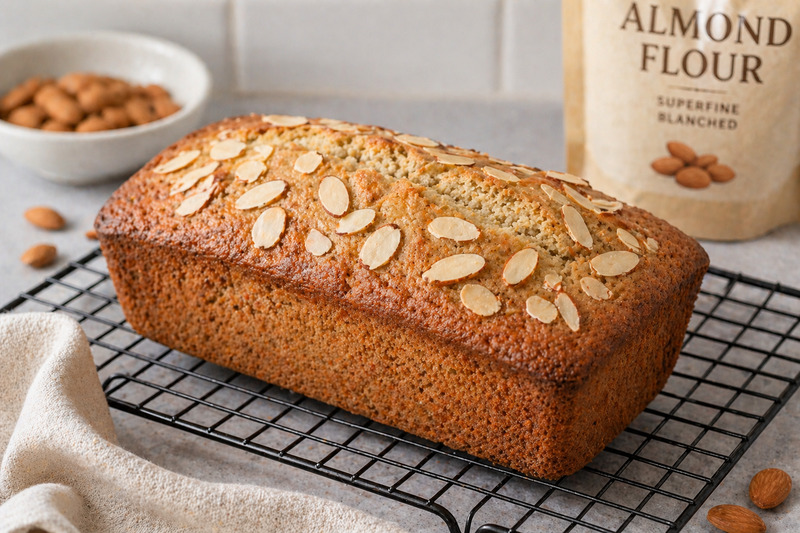
Common Reasons Your Baked Goods Are Too Moist
One of the most frequent causes is using too much almond flour or too many wet ingredients. Since almond flour doesn’t absorb liquid efficiently, even a small imbalance can leave your baked goods feeling damp.
Another common issue is underbaking. Almond flour recipes often need slightly longer bake times at lower temperatures to cook through properly. The outside may look golden while the inside is still too soft.
Using the wrong type of almond flour can also make a difference. Blanched almond flour is finer and more consistent, while almond meal is coarser and can hold more moisture, leading to heavier results.
Finally, not allowing baked goods to cool completely can give the impression that they are too moist. Almond flour items continue to set as they cool, and cutting into them too soon can reveal a texture that hasn’t fully stabilized.
How to Fix Moist Almond Flour Baked Goods
Start by checking your ingredient ratios. If a recipe consistently turns out too moist, try slightly reducing the liquid ingredients or increasing the dry ingredients just a bit. Even a small adjustment can improve the texture.
Make sure you are measuring correctly. Almond flour should be spooned into a measuring cup and leveled, not packed down. Using too much flour can throw off the balance and affect baking time.
Adjust your baking time and temperature. Lowering the oven temperature slightly and extending the baking time helps the inside cook without overbrowning the outside. If needed, tent the top loosely with foil to prevent excessive browning.
Adding structure can also help. Ingredients like an extra egg, a small amount of coconut flour, or a starch such as arrowroot can absorb excess moisture and improve the overall crumb.
Cooling is just as important as baking. Allow your baked goods to rest in the pan for a few minutes, then transfer them to a wire rack and let them cool completely. This step helps excess moisture evaporate and allows the texture to firm up.
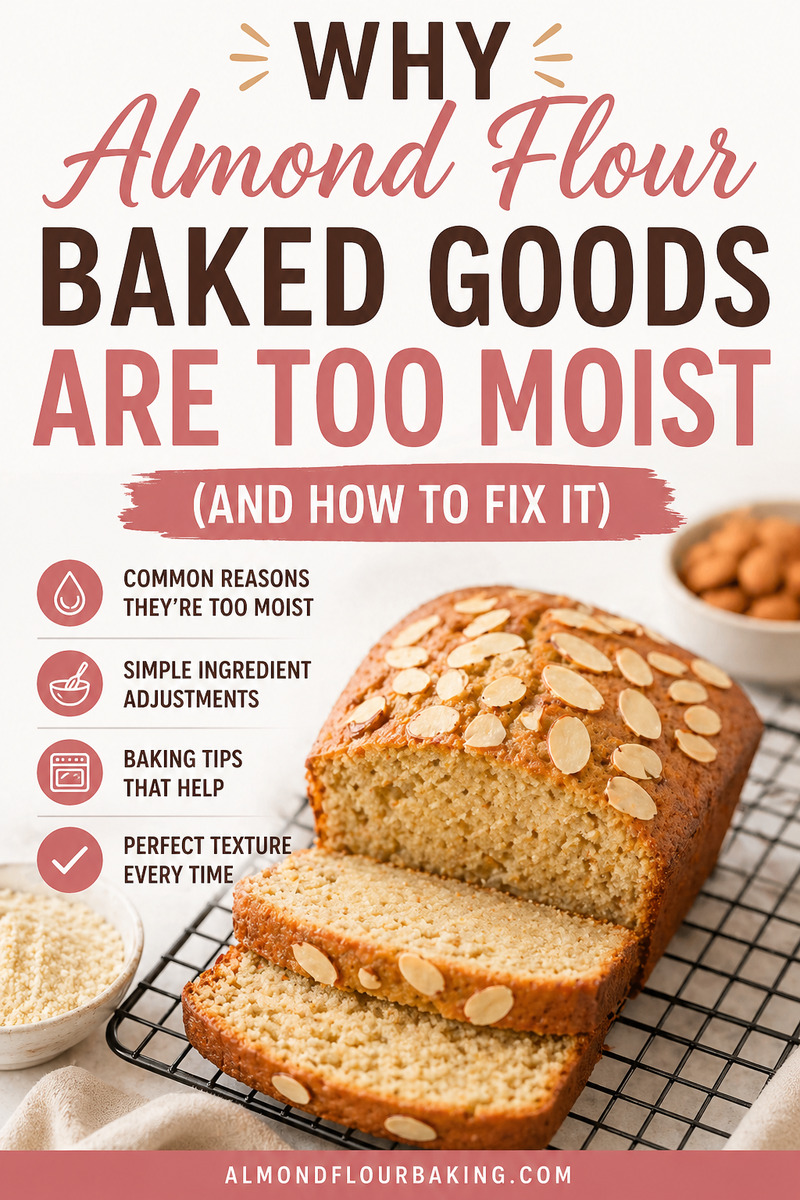
Simple Ingredient Tweaks That Make a Big Difference
If your recipes consistently turn out too moist, consider incorporating a small amount of coconut flour. Coconut flour is highly absorbent, so even one or two tablespoons can balance out the moisture in a recipe.
Another helpful adjustment is reducing fats slightly. Since almond flour already contains natural oils, cutting back on added butter or oil can prevent an overly heavy texture.
You can also experiment with baking powders and baking soda. Proper leavening helps create a lighter structure, which reduces the perception of moisture.
RELATED: Common Almond Flour Baking Mistakes
Conclusion
Understanding why almond flour baked goods are too moist comes down to recognizing how this ingredient behaves differently from traditional flour. Its higher fat content, lack of gluten, and lower absorbency all play a role in the final texture. By adjusting your ingredient ratios, baking time, and technique, you can avoid overly moist results and create baked goods that are tender, balanced, and fully cooked. With a few simple tweaks, almond flour baking becomes not only easier but far more reliable.

Ellen is a busy mom of a 25-year-old son and 29-year-old daughter and a grandma to an adorable girl. She owns 6 blogs and is addicted to social media. She shares simple tips and recipes for baking with almond flour. If you’d like to work together, email [email protected] to chat.