
Struggling with almond flour baking? Learn the most common almond flour baking mistakes—including dense centers, greasy bottoms, sinking middles, over-browning, and crumbly results—and how to fix them for better bakes every time.
Posts may be sponsored. This post contains affiliate links, which means I will make a commission at no extra cost to you should you click through and make a purchase. As an Amazon Associate I earn from qualifying purchases.
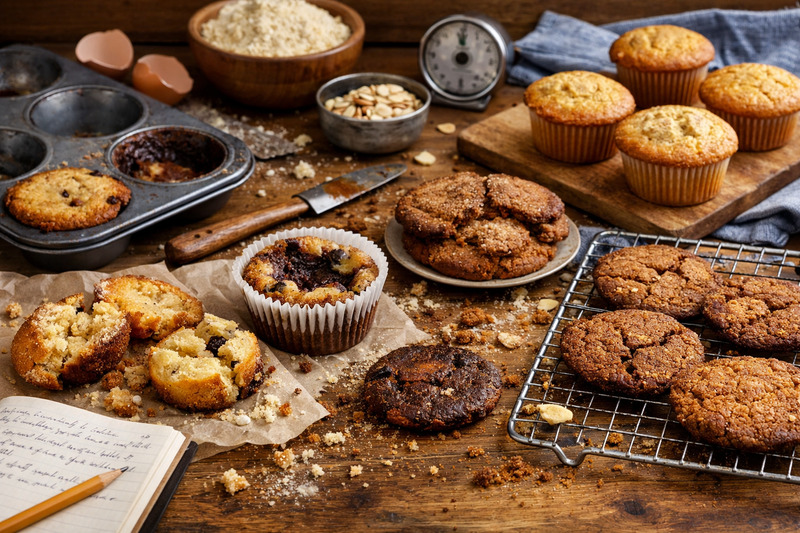
Common Almond Flour Baking Mistakes (and How to Fix Them)
Almond flour baking can feel a little unpredictable—especially if you’re used to working with wheat flour. One batch turns out beautifully moist, while the next is dense, greasy, or crumbly for no obvious reason. The truth is, almond flour behaves very differently from traditional flours, and small missteps can have a big impact on the final result. The good news? Most almond flour baking problems are easy to fix once you know what’s causing them. Below are the most common issues bakers run into and how to troubleshoot them with confidence.
Dense or Gummy Centers
One of the most frequent complaints with almond flour baking is a dense or almost wet center, even when the outside looks fully baked. Almond flour lacks gluten, which means it doesn’t provide the same structure or lift as wheat flour. Dense centers often happen when there’s too much moisture, not enough structure, or the bake time is misjudged.
To fix this, make sure you’re using finely ground blanched almond flour rather than almond meal, which is coarser and heavier. Pay close attention to oven temperature—many almond flour baked goods need slightly lower heat and longer baking times to cook through evenly. Letting baked items cool completely before slicing also helps, as almond flour continues to set as it cools.
Greasy or Oily Bottoms
If your baked goods leave an oily residue or feel overly greasy on the bottom, almond flour’s natural fat content is usually the culprit. This tends to happen when too much fat is added or when baked items sit too long in the pan after coming out of the oven.
To prevent greasy bottoms, avoid over-greasing pans and consider using parchment paper instead. Removing baked goods from the pan after a short cooling period allows excess oils to dissipate rather than soak back in. Using a rack for cooling can make a noticeable difference in texture.
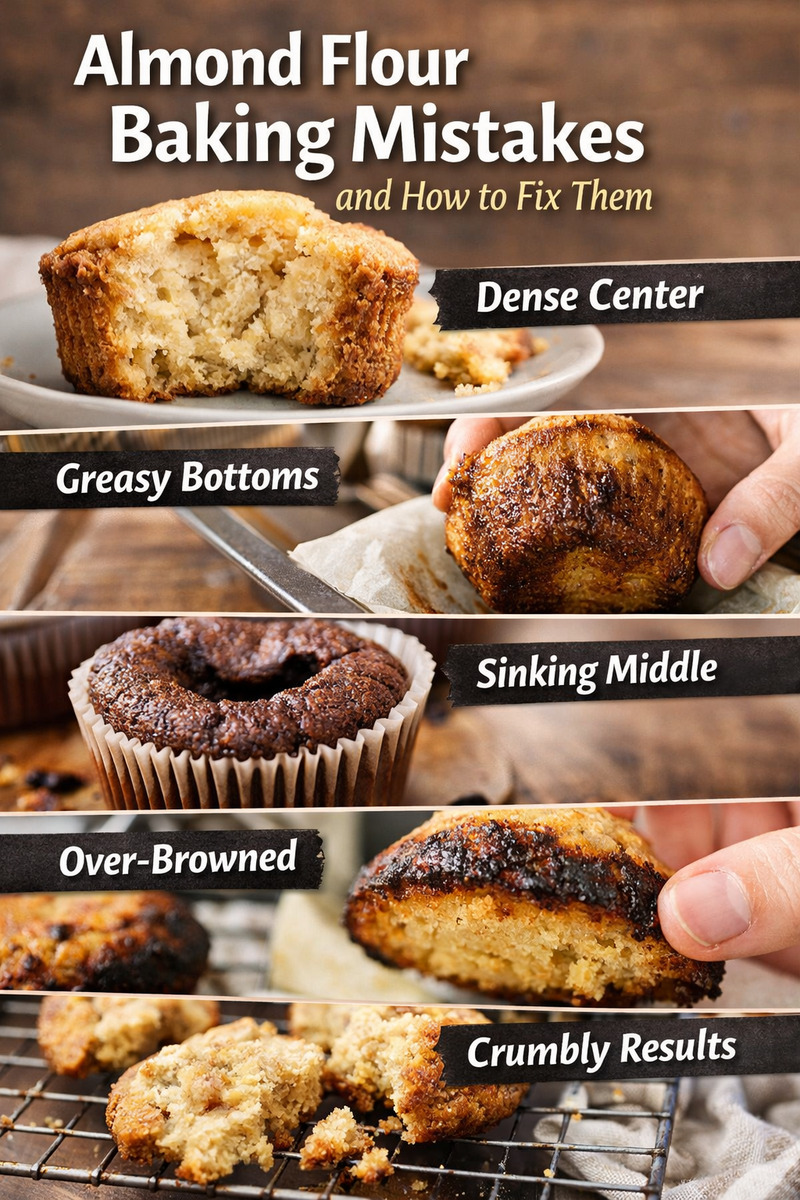
Sinking Middles
A sunken center can be frustrating, especially when everything looks perfect in the oven. This issue often stems from structural imbalance—too much leavening, opening the oven door too early, or underbaking the center.
To avoid sinking, measure leavening carefully and resist the urge to check too early. Almond flour baked goods are more delicate and benefit from consistent oven heat. Make sure the center is fully set before removing from the oven, even if that means extending the bake time slightly.
RELATED: Beginner’s guide to baking with almond flour
Over-Browning on the Outside
Almond flour browns faster than many other flours due to its fat content. This can lead to dark edges or tops while the inside is still cooking.
Lowering the oven temperature slightly and baking for a longer period helps promote even cooking. If the top is browning too quickly, loosely tenting with foil partway through baking can protect the surface while allowing the center to finish cooking. Using lighter-colored pans instead of dark ones can also reduce over-browning.
Crumbly or Fragile Results
Crumbly almond flour baked goods usually mean there isn’t enough binding or moisture to hold everything together. Because almond flour doesn’t contain gluten, it relies heavily on eggs or other binding ingredients for structure.
Allow baked goods to cool fully before handling, as they firm up significantly during cooling. Using the correct grind of almond flour and measuring accurately helps maintain the right balance. In many cases, crumbly results aren’t a failure—they’re a sign that the bake just needs more time to set.
Conclusion
Almond flour baking comes with a learning curve, but once you understand how it behaves, it becomes far less intimidating. Dense centers, greasy bottoms, sinking middles, over-browning, and crumbly textures are all common—and fixable. Each bake teaches you something new, and small adjustments can lead to big improvements. With patience and a little troubleshooting, almond flour can become one of the most reliable and rewarding ingredients in your kitchen.

Ellen is a busy mom of a 25-year-old son and 29-year-old daughter and a grandma to an adorable girl. She owns 6 blogs and is addicted to social media. She shares simple tips and recipes for baking with almond flour. If you’d like to work together, email [email protected] to chat.