
If you’ve ever pulled a baking sheet out of the oven and discovered that your almond flour cookies spread too much, you’re not alone. Instead of thick, tender cookies, you might end up with thin, flat cookies that run together or have greasy edges.
Posts may be sponsored. This post contains affiliate links, which means I will make a commission at no extra cost to you should you click through and make a purchase. As an Amazon Associate I earn from qualifying purchases.
The good news is that there are several things you can check before giving up on your recipe.
Almond flour behaves differently from traditional wheat flour, and small changes in temperature, ingredient measurements, and baking techniques can affect the results.
Here’s why almond flour cookies sometimes spread too much and what you can do to help them hold their shape.
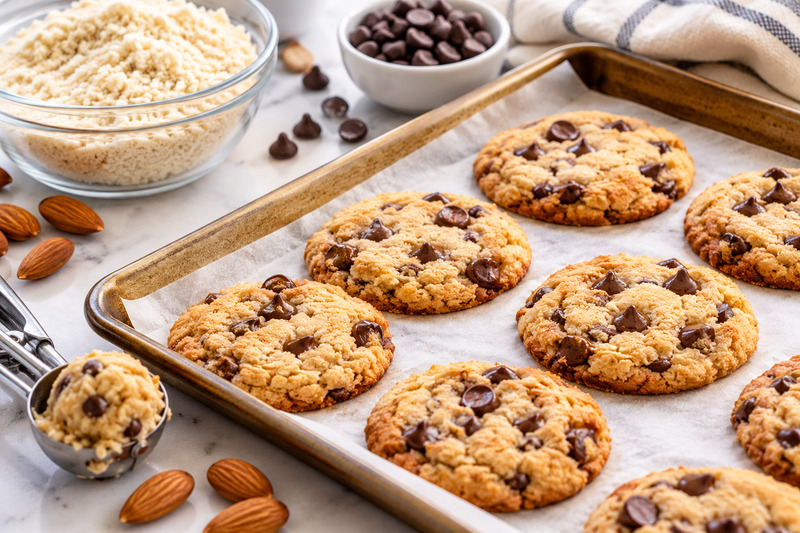
Why Do Almond Flour Cookies Spread Too Much?
Almond flour cookies can spread too much when the dough is too warm, the ingredient proportions are off, or the cookies bake on a hot or heavily greased baking sheet.
Other possible causes include too much liquid, too much fat or sugar, and an oven that hasn’t reached the correct temperature.
Unlike wheat flour, almond flour doesn’t contain gluten. Gluten helps provide structure in traditional baked goods. Almond flour also contains more natural fat than wheat flour, which affects how the dough behaves as it heats.
This doesn’t mean almond flour cookies are difficult to make. It simply means that recipes need to be balanced specifically for almond flour.
If you’re new to this ingredient, read my complete beginner’s guide to baking with almond flour for more information.
1. Your Cookie Dough Is Too Warm
One of the first things to check is the temperature of your cookie dough.
If your recipe contains butter and the butter becomes too soft or partially melted, the cookies may begin spreading before they have enough structure to hold their shape.
This can happen when your kitchen is warm or when you spend a long time preparing the dough.
How to fix it
If your recipe calls for chilling, don’t skip that step.
For a dough that seems unusually soft, try refrigerating it for 30 to 60 minutes before baking, provided the recipe is suitable for chilling.
Chilling helps firm up the fat and can make the dough easier to handle.
If you’re making several batches, keep the remaining dough refrigerated until you’re ready to bake it.
Not every almond flour cookie recipe needs chilling, so follow the instructions for the specific recipe you’re using. I don’t need the chill the dough when I make these almond flour peanut butter cookies.
2. You Added Too Much Butter or Oil
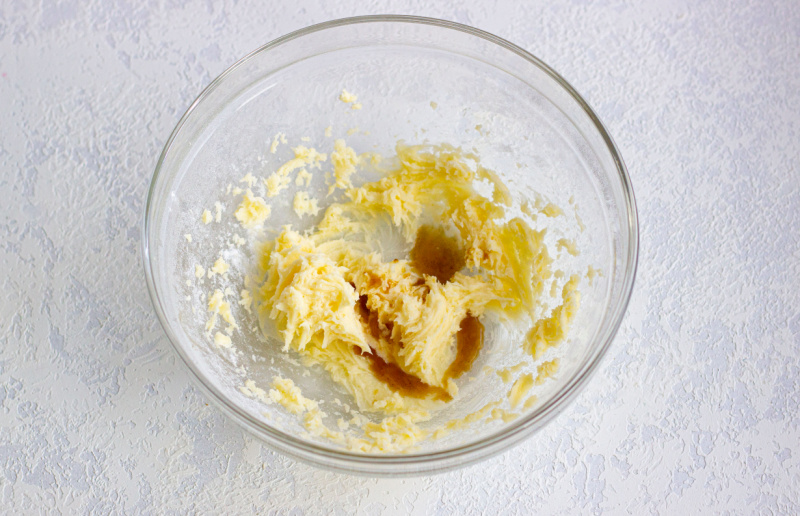
Almond flour already contains a significant amount of natural fat from almonds.
Adding more butter, coconut oil, or another fat than the recipe requires can upset the balance of the dough.
As the fat melts in the oven, the cookies may spread farther than expected.
In some cases, you might notice greasy bottoms or edges.
How to fix it
Measure butter and oil carefully instead of estimating.
If the recipe calls for softened butter, don’t substitute melted butter unless the instructions specifically allow it.
Avoid adding extra oil because the dough looks dry. Some almond flour doughs naturally have a different texture from wheat flour cookie dough.
If you’re adapting a traditional cookie recipe, remember that replacing wheat flour with almond flour isn’t usually a simple one-to-one substitution.
For more information, see my guide to baking with almond flour.
3. The Almond Flour Wasn’t Measured Correctly
Using too little almond flour can leave the dough without enough dry ingredients to balance the fat and moisture.
This can lead to cookies that spread too much or feel overly soft.
Measuring flour by volume can produce inconsistent results depending on how tightly it’s packed into the measuring cup.
How to fix it
A digital kitchen scale is one of the most useful tools for improving baking consistency.
If your recipe provides ingredient weights, use them.
If you’re measuring by cups, gently stir the almond flour, spoon it into the measuring cup, and level the top without packing it down.
Don’t scoop directly from the bag and compress the flour into the cup.
Also, make sure you’re using the type of almond flour specified in the recipe.
4. You’re Using Almond Meal Instead of Fine Almond Flour
Almond flour and almond meal aren’t always interchangeable.
Blanched almond flour is usually finely ground and made from almonds with their skins removed.
Almond meal is often coarser and may contain almond skins.
The difference in texture can affect how ingredients combine and how the finished cookies hold together.
How to fix it
For most delicate cookies, choose finely ground blanched almond flour unless the recipe specifies otherwise.
Check the package before baking.
If you use almond meal in a recipe developed for fine almond flour, the cookies may have a coarser texture and behave differently.
That doesn’t mean almond meal is bad for baking. It’s simply better suited to certain recipes.
5. Your Baking Sheet Is Too Hot
Have you ever noticed that the first batch of cookies turns out better than the second?
The baking sheet might be the problem.
When you place fresh cookie dough on a hot baking sheet, the fat begins warming before the cookies even enter the oven.
This can encourage spreading.
How to fix it
Allow your baking sheet to cool between batches.
If you bake cookies frequently, having two baking sheets can make this easier.
While one batch is in the oven, you can prepare the next batch on a separate, cool sheet.
Never place freshly shaped almond flour cookie dough directly onto a baking sheet that’s still hot from the previous batch.
6. Your Baking Sheet Has Too Much Grease
Some cookie recipes call for greasing the baking sheet, but adding extra oil or butter can encourage the dough to spread.
The cookies may slide outward as the fat melts.
You might also notice overly browned or greasy bottoms.
How to fix it
Try lining your baking sheet with parchment paper if your recipe recommends it.
Parchment paper helps prevent sticking without requiring a heavy coating of butter or oil.
A silicone baking mat may also work well, although the results can vary depending on the recipe and baking surface.
Use the pan preparation method recommended by the recipe whenever possible.
7. Your Oven Temperature Is Incorrect
Oven temperature affects how quickly cookie dough spreads and sets.
If the oven is too cool, the fat may melt and the dough may spread before the cookies develop enough structure.
An oven that’s too hot can also cause problems with certain recipes.
This is especially important with almond flour because it can brown relatively quickly.
How to fix it
Preheat your oven fully before adding the cookies.
If your baked goods consistently turn out differently from the recipe instructions, consider checking the oven temperature with an oven thermometer.
Avoid automatically lowering the temperature for every almond flour recipe.
Instead, use the temperature specified by a reliable recipe developed for almond flour.
8. There’s Too Much Sugar or Liquid
Sugar affects cookie texture and spreading.
As sugar dissolves during baking, it influences how the dough flows and sets.
Adding more sugar than the recipe requires can result in thinner cookies.
Extra milk, eggs, maple syrup, or other liquid ingredients can also change the dough’s consistency.
How to fix it
Measure all ingredients carefully.
Use the egg size specified in the recipe.
Avoid substituting liquid sweeteners for granulated sweeteners without making other recipe adjustments.
For example, replacing a powdered sweetener with maple syrup introduces additional liquid.
Different sugar substitutes also behave differently in baking. A substitution that works in one recipe may not work in another.
For the most reliable results, follow a recipe that has been developed for the ingredients you want to use.
9. The Recipe Wasn’t Designed for Almond Flour
One common mistake is taking a traditional chocolate chip cookie recipe and replacing the all-purpose flour with the same amount of almond flour.
Unfortunately, the results may be disappointing.
Almond flour doesn’t absorb moisture or provide structure in the same way as wheat flour.
A traditional cookie recipe may contain more butter, sugar, or liquid than an almond flour version can accommodate.
How to fix it
Start with recipes specifically developed for almond flour.
For example, try my almond flour peanut butter cookies or almond flour shortbread cookies.
These recipes use ingredient combinations designed around almond flour rather than treating it as a direct substitute for wheat flour.
Once you’re comfortable with almond flour baking, you can experiment with small adjustments.
How to Save Almond Flour Cookie Dough That Is Spreading Too Much
If you’ve already mixed your dough and the first batch spreads too much, you may be able to improve the remaining cookies.
Start by identifying the most likely problem.
If the dough feels very warm or soft: Refrigerate the remaining dough for 30 minutes, then bake one test cookie.
If you used a hot baking sheet: Allow the sheet to cool completely before preparing the next batch.
If the cookies have greasy bottoms: Check whether the baking sheet was overgreased or whether too much fat was added.
If the dough seems unusually wet: Double-check your ingredient measurements before changing the recipe.
If the oven seems too cool: Verify that it has fully preheated and check its temperature if possible.
Avoid adding large amounts of extra almond flour without knowing what caused the problem. Too much additional flour can leave the cookies dry, dense, or crumbly.
It’s better to make one small adjustment at a time and bake a test cookie to see whether it helps.
What If Your Almond Flour Cookies Are Already Flat?
If your cookies have already baked and spread too much, you usually can’t make them thick again.
However, they may still taste delicious.
Let the cookies cool completely before moving them. Almond flour cookies can be delicate while warm and may firm up as they cool.
If they have spread together, you can sometimes separate them carefully after cooling.
Flat cookies can also be crumbled over yogurt or ice cream or used as a topping for another dessert.
As long as they’re properly baked and taste good, there’s no reason to waste them just because they aren’t perfectly shaped.
How to Keep Almond Flour Cookies From Spreading: Quick Checklist
Before baking your next batch, review these simple tips:
- Use a recipe specifically developed for almond flour.
- Choose finely ground almond flour when the recipe calls for it.
- Measure your ingredients carefully.
- Avoid using butter that’s warmer than the recipe requires.
- Chill the dough when the recipe recommends it.
- Use a cool baking sheet for every batch.
- Avoid adding unnecessary grease to the pan.
- Preheat your oven fully.
- Follow the recipe’s instructions for sugar and liquid ingredients.
- Bake one test cookie before baking an entire batch if you’re experimenting with substitutions.
These small steps can help you get more consistent results.
Helpful Tools for Baking Almond Flour Cookies
You don’t need expensive baking equipment, but a few basic tools can make baking easier.
Digital kitchen scale: Helps you measure almond flour, butter, and other ingredients accurately.
Cookie scoop: Makes it easier to portion evenly sized cookies so they bake consistently.
Parchment paper: Provides a convenient surface for baking without excessive greasing.
Baking sheets: Having two allows one to cool while the other is in the oven.
Oven thermometer: Helps you check whether your oven is heating to the temperature shown on its controls.
If you bake regularly, these are practical tools to consider adding to your kitchen.
Frequently Asked Questions About Almond Flour Cookies Spreading
Why are my almond flour cookies flat and greasy?
Flat, greasy cookies may contain too much fat, have an incorrect balance of wet and dry ingredients, or have been placed on an overly greased baking sheet. Warm dough can also contribute to spreading.
Check your measurements and baking method before changing the recipe.
Should I refrigerate almond flour cookie dough before baking?
Some almond flour cookie recipes benefit from chilling because it firms up the fat and makes the dough easier to handle.
If your recipe recommends chilling, follow those instructions. For other recipes, chilling may be optional or may change the intended texture.
Can I add more almond flour to stop cookies from spreading?
Sometimes a small adjustment to the dry ingredients can help a dough that’s too wet, but adding almond flour isn’t a guaranteed fix.
If the real problem is a hot baking sheet, warm butter, or incorrect oven temperature, extra flour may make the cookies dry without solving the issue.
Does almond flour make cookies spread more than regular flour?
Almond flour behaves differently because it contains no gluten and has more natural fat than wheat flour.
That can make some cookie recipes more prone to spreading if their ingredient proportions aren’t balanced correctly.
However, a well-developed almond flour cookie recipe can produce cookies that hold their shape nicely.
Why do my almond flour cookies fall apart after baking?
Almond flour cookies may be more delicate than traditional cookies because they don’t contain gluten.
They can also crumble if the ingredient proportions are incorrect or if they’re moved before they’ve had time to cool.
Let the cookies rest on the baking sheet as directed, then transfer them carefully to a cooling rack.
Can I use coconut flour instead of almond flour to prevent spreading?
Coconut flour absorbs much more liquid than almond flour, so it generally cannot be substituted in equal amounts.
Using coconut flour without adjusting the recipe may produce cookies that are too dry or crumbly.
It’s better to choose a recipe specifically designed for the flour you want to use.
Final Thoughts
If your almond flour cookies spread too much, don’t assume you need to give up on baking with almond flour.
Start by checking the temperature of your dough, the accuracy of your measurements, and the condition of your baking sheet.
Small details can make a noticeable difference in how cookies turn out.
The easiest way to get consistent results is to use recipes developed specifically for almond flour and follow the instructions carefully.
With a little practice, you can make delicious almond flour cookies that have the texture and shape you’re looking for.
For more ideas, try my almond flour peanut butter cookies or explore my almond flour shortbread cookies.

Ellen is a busy mom of a 25-year-old son and 29-year-old daughter and a grandma to an adorable girl. She owns 6 blogs and is addicted to social media. She shares simple tips and recipes for baking with almond flour. If you’d like to work together, email [email protected] to chat.